

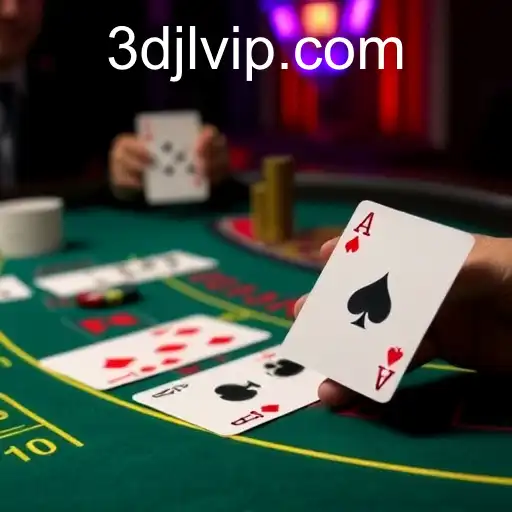

Blackjack, also known as 21, is one of the most popular and enduring card games played in casinos worldwide. Its simple rules combined with strategic depth make it a favorite among both amateur and seasoned gamblers. The game’s history is as intriguing as its current iterations, drawing players into a mix of luck and skill where each hand can change the stakes.
The origins of blackjack are somewhat murky, with various accounts tracing its beginnings back to 17th-century French casinos, where a game called "vingt-et-un" or "twenty-one" was popular. This French game bore a remarkable resemblance to modern blackjack, including its objective of reaching a hand value closest to 21 without exceeding it.
As the game traveled to North America, it evolved gradually. The name "blackjack" appeared during the early 20th century in the United States. Casinos at the time offered bonus payouts for hands containing the ace of spades and a black jack (either clubs or spades), which led to the game's current name.
Blackjack is played with one or more decks of 52 cards, with most casinos favoring six or eight decks shuffled together. The aim of the game is to beat the dealer by acquiring a hand value as close as possible to 21 without surpassing it.
The card values are straightforward: cards numbered 2 through 10 carry their face values, face cards (jack, queen, king) are valued at 10, and aces can be valued either as 1 or 11, depending on which value benefits the hand. This flexibility makes aces highly favorable cards.
At the beginning of the game, each player is dealt two cards, usually face-up, while the dealer receives one card face-up and one face-down, known as the "hole" card. Players then decide whether to "hit" (draw another card) or "stand" (keep their current hand) to reach a value close to 21.
Players can also "double down" or "split" pairs into separate hands, adding to the strategic possibilities of the game. If a player’s hand exceeds a total value of 21, they "bust" and automatically lose the round.
While blackjack incorporates an element of chance, players can significantly improve their odds by applying basic strategies derived from mathematical probability analyses. These strategies involve making decisions based on the player's hand and the dealer's visible card.
Deciding when to hit or stand is crucial. Players generally hit on a hand value of 11 or lower, since busting is impossible. Meanwhile, standing on a hand of 17 or higher minimizes the risk of busting. Specific strategies can dictate different actions based on the dealer's up card, making blackjack both complex and engrossing.
Doubling down allows players to double their initial bet in exchange for committing to stand after receiving only one more card. This strategy is effective when players have a strong hand (such as a total of 10 or 11), and the dealer's up card is weak (a 2 through 6).
Card counting appeals to many dedicated blackjack players, offering a way to gain an edge over the house by keeping track of high and low cards remaining in the deck. One popular method is the Hi-Lo system, where values are assigned to cards to help players predict which cards remain.
Card counting is not illegal, but it is frowned upon by casinos and may result in a player being banned if caught. It requires intense concentration, practice, and mental acuity, but can significantly increase a player’s advantag in the game.
There are numerous blackjack variants, each adding unique twists to the traditional game. These changes can affect the odds and strategies players might use. Some popular variants include:
Players are dealt two hands and can switch the top cards between those hands to their advantage, adding an additional layer of strategy. However, a "natural" (a two-card 21) typically only pays even money rather than the usual 3:2.
Played with a 48-card deck where all 10s are removed, Spanish 21 offers more player-friendly rules such as the ability to re-double a double down, but compensates by slightly increasing the house edge.
Both of the dealer's cards are dealt face-up in this variant, providing a significant advantage to the player. To offset this advantage, several rules are often adjusted, such as ties resulting in a win for the dealer.
In the digital age, innovations like 3djl have begun to transform the landscape of online gaming. These advancements provide players with immersive experiences, combining crisp graphics with real-time interactions to mimic the thrill of a physical casino setting.
As technology progresses, the integration of virtual reality and artificial intelligence is anticipated to further enhance the online blackjack experience, offering even more interactive and entertaining environments for players across the globe.
As the future of blackjack continues to evolve, both in physical casinos and online platforms, players can expect an ever-expanding array of choices and opportunities to experience this timeless card game in new and exciting ways. Transitioning from the traditional to the modern, blackjack remains a dynamic and challenging game that captivates the hearts of millions.

Discover the captivating world of LongBall, a strategic game that combines physical skill with mental acumen. Learn about its origins, gameplay mechanics, and how it ties into today's current events.

Discover the captivating world of GuanGong, a 3DJL-inspired game combining strategy, history, and modern technology.

Dive into 3CoinTreasures2, a fascinating adventure where ancient treasures, captivating gameplay, and strategic thinking collide.

Explore RubyHit, an innovative 3D multiplayer experience that blends immersive gameplay with strategic elements, creating a unique adventure for gamers.

Dive into the vibrant world of PartyStar, the latest sensation in 3D gaming, and unravel its intriguing gameplay and rules.

Dive into SupermarketSpree, the latest 3D shopping game that combines strategy and entertainment. Learn about its unique gameplay and rules.
